
Digital Citizenship at Avenues: Building Critical Thinking and Healthy Technology Habits

Digital Citizenship Week, observed in October, offers an opportunity to reflect on this work. This year’s focus on critical thinking in a world with AI underscores the importance of helping students question information, evaluate sources, and make intentional choices about technology.
At Avenues, this learning extends well beyond a single week. Digital citizenship, information literacy, which includes media and AI literacy, and digital wellbeing are woven into teaching and learning across grades, with an approach that evolves as students grow.
Building Healthy Technology Habits in the Early Years
Digital citizenship education begins in our Early Learning Center, where picture books and simple conversations during library time introduce foundational ideas about digital wellbeing. Through stories, young children begin to explore healthy habits and understand how technology fits into their daily lives.
As students progress through the Lower Division, these conversations expand to include finding a healthy balance with technology, making thoughtful choices about when and how to use it, and recognizing how digital experiences can affect feelings and relationships.
Through classroom, library, and community experiences, students develop the awareness and decision-making skills that support a healthy relationship with technology.
Developing Media Literacy and AI Literacy
As students grow, digital citizenship increasingly intersects with information and media literacy. In a world where information is readily accessible but not always reliable, students need to learn how to question what they encounter, evaluate sources, recognize misleading content, and verify information.
Generative AI makes these skills even more essential. AI tools can produce convincing responses that are inaccurate or unsupported by reliable sources. Learning to distinguish between information that sounds credible and information that can be verified is an important part of AI literacy.
Through classroom learning, research projects, and library instruction, Avenues students explore how information is created and shared, why thoughtful evaluation matters, and when technology can meaningfully support learning. The goal is to help students develop the judgment to assess both the information they encounter and the tools they use.
PAUSE: A Shared Approach to Digital Wellbeing
Our commitment to digital citizenship and well-being extends beyond the classroom.
Last year, I collaborated with Ali Snell, Director of Student Wellbeing, and Jenna Rosenbloom, P’29, Admissions & Enrollment, to form a Digital Wellbeing Group, bringing together students, parents, and educators to explore healthy technology habits.
Together, the group developed PAUSE, a framework that encourages members of our community to:
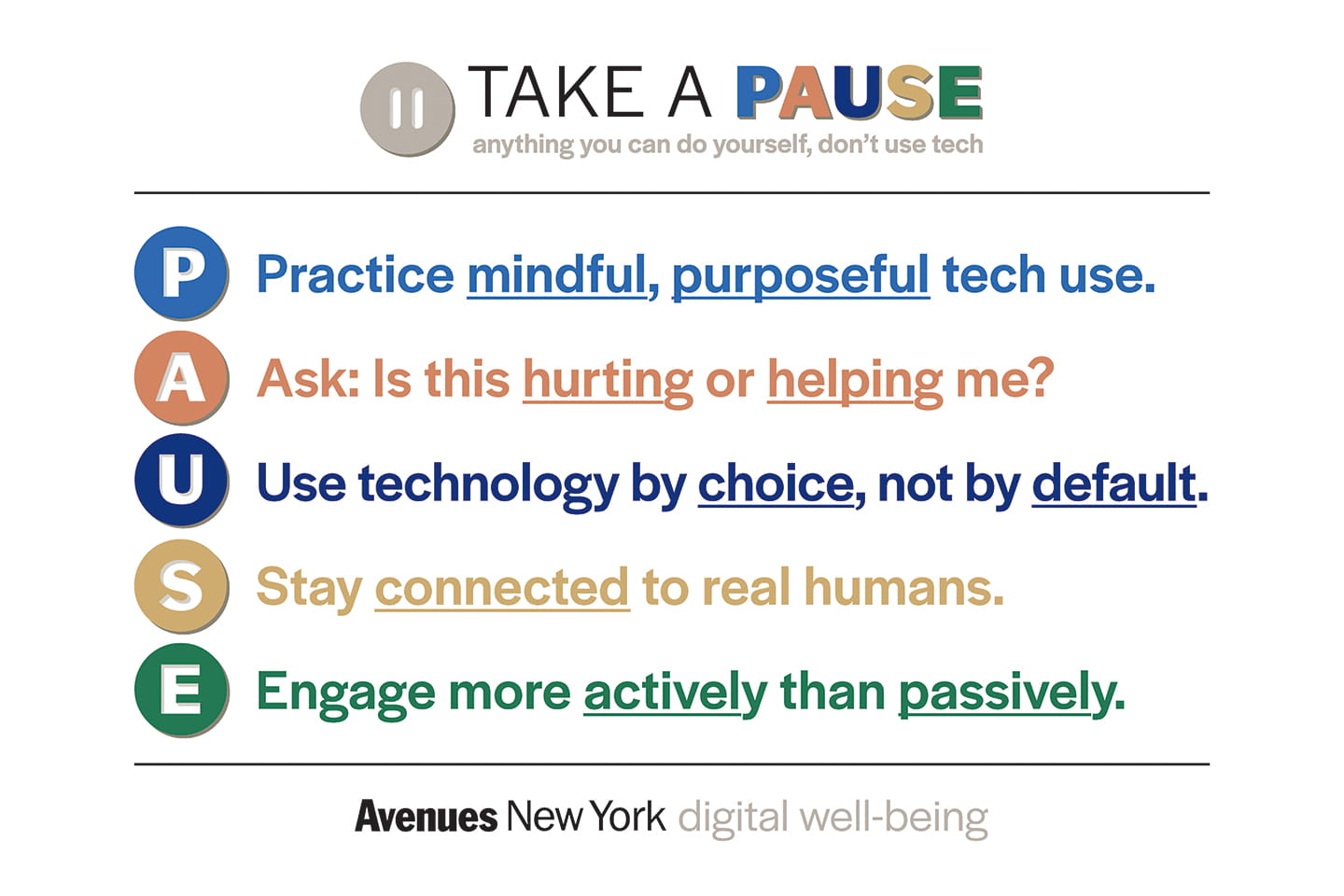 This year, the group looks forward to introducing PAUSE across grades and throughout the school community, creating a shared language for intentional technology use and digital well-being.
Helping Students Navigate the Digital World
Digital citizenship develops through ongoing conversations, everyday choices, and partnerships among students, educators, and families.
From exploring technology habits in the earliest years to evaluating sources and AI-generated content in later grades, Avenues helps students build the critical thinking and healthy habits they need to navigate a changing digital landscape with confidence and discernment.
Through this shared work, thoughtful, intentional technology use becomes part of our everyday school culture.


 © 2026 Avenues: The World School All rights reserved.