
5 Questions to Ask on a High School Tour
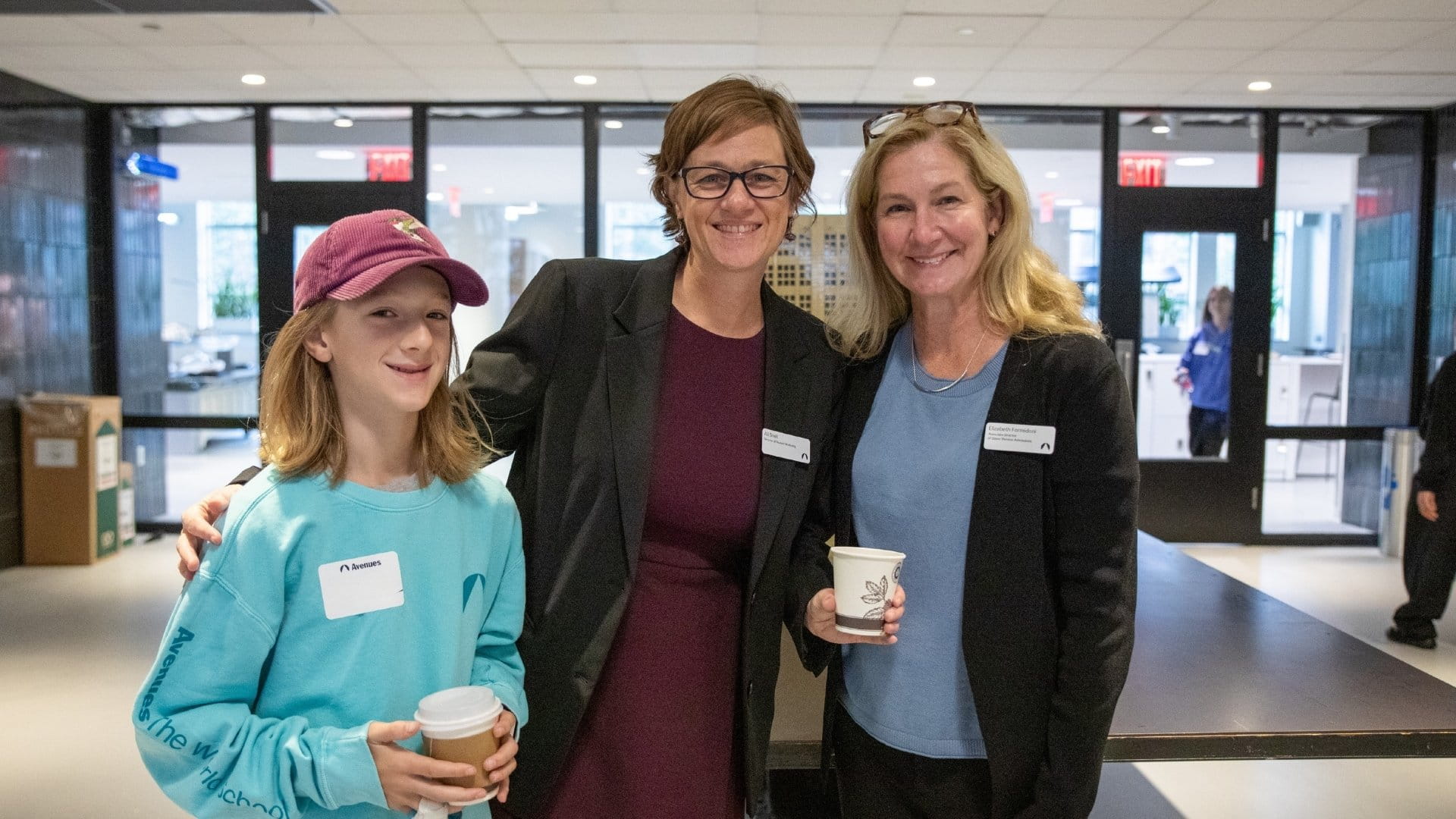
As a parent of three teenagers, I know how important it is to find a high school where your child will be challenged academically and seen as an individual. As Associate Director of Upper Division Admissions at Avenues New York, I also meet families at every stage of their school search.
A high school tour can be one of the most meaningful parts of that process. Beyond seeing classrooms and learning about courses, your child has a chance to imagine themselves as part of the community.
Whether you’re exploring private high schools in New York City or beginning your search elsewhere, a tour is an opportunity to listen, observe, and ask questions that matter to your family.
When I was visiting colleges, my dad would ask our tour guides the most obscure—and, to me, embarrassing—questions, like “Does your campus have a backup generator?” Looking back, I appreciate his curiosity. The questions you ask can move a conversation beyond a school’s overview and reveal what it feels like to learn and grow there.
Here are five questions to bring on your next high school tour. Some are especially valuable to ask a current student; others can open a helpful conversation with an admissions colleague.
1. What is one of the most meaningful connections you’ve had with a teacher?
Teachers make all the difference. Asking a student about a meaningful connection with a teacher can tell you much more than asking whether the teachers are “good.”
Listen for specific stories: a teacher who took time to explain a difficult concept, encouraged a student to tackle a greater challenge, or noticed an interest and helped them pursue it.
At Avenues, I hear about teachers cheering on students at volleyball games, supporting them at robotics competitions, and remembering to wish them a happy birthday. These everyday moments matter. They help students feel known and supported as they move through an increasingly demanding academic program.
A useful follow-up: When you need help, how comfortable do you feel asking for it?
2. How does the school balance academic rigor with student wellbeing?
We want our teenagers to work hard, think deeply, and step outside their academic comfort zones. We also want them to have friendships, explore their interests, and feel supported.
A high school tour is a chance to understand how those priorities come together in daily life. What does homework look like? Does it deepen understanding and encourage independent thinking? How do students manage competing deadlines, and who helps when they feel overwhelmed?
Ask students to describe a typical week, including time for clubs, athletics, the arts, and rest. Their answers can help you understand how the school approaches both academic challenge and student wellbeing.
A useful follow-up: What happens when a student is struggling with their workload?
3. How do parents stay connected to the high school community?
Parent involvement changes as children grow. Teenagers need increasing independence, but parents can still benefit from a welcoming community and meaningful connections with one another.
Ask how families get to know each other, communicate with the school, and participate in school life. Is there a network of parents who enjoy spending time together? Are there opportunities to get involved that fit different interests and schedules?
Think about what you would enjoy, too. I’m thoroughly enjoying the multiple parent book clubs I’m part of, and I hope someday I might show up for the parent running club!
A useful follow-up: How do new high school families find their place in the community?
4. What opportunities do students have to lead and pursue their own interests?
The high school years give students an opportunity to discover what excites them and take greater ownership of their learning.
Ask how the school helps students explore an interest in depth. This might include independent research, internships, opportunities to publish their work or projects that connect learning to the wider community.
Clubs and extracurricular activities can also offer meaningful opportunities to lead, collaborate, and mentor younger students. Beyond asking which activities exist, ask what happens when a student brings a new idea.
A useful follow-up: Can you share an example of a student who started something and how the school supported them?
5. How does the school prepare students for college and life beyond high school?
Different schools emphasize different skills and qualities in their graduates. A school tour is an opportunity to understand what those priorities look like in practice.
Start with the school’s mission, then ask how students experience it in their everyday learning. How do they develop independence, collaborate with others, communicate their ideas, and respond when something doesn’t go as planned?
Ask how those skills grow from ninth through twelfth grade, and how students receive guidance as they consider college and their next steps.
A useful follow-up: What can a graduating senior do confidently that they might have found difficult when they first arrived?
Finding the Right High School Fit
After your visit, make time to hear what stood out to your child. Where did they feel comfortable? What sparked their curiosity? Could they imagine asking a teacher for help, joining a club, or contributing to a classroom conversation?
The most useful tour is one that helps your family understand both the academic experience and the people who shape it. Come with questions, leave room for unexpected conversations, and pay attention to the moments that help your child picture themselves there.
Exploring high school at Avenues New York? Learn more about our Upper Grades program for grades 9–12 and connect with our admissions team about opportunities to visit.
Explore more...
LOAD MORE NEWS
From Kindergarten Curiosity to Stanford: Sophia Lande & Professor Galapagos
Choosing a Private School in NYC: Five Tips for Families with Young Children

Tom Bob Visits Avenues New York

How to Get to Know Schools When You Can’t Visit


 © 2026 Avenues: The World School All rights reserved.