
Upper Grades
Get to know us better at an event
.jpg?rev=012b5031c0324a2c98e6d8ac474e26f4&hash=D3F884346F01D84BA7BB65E95B6F96C3)
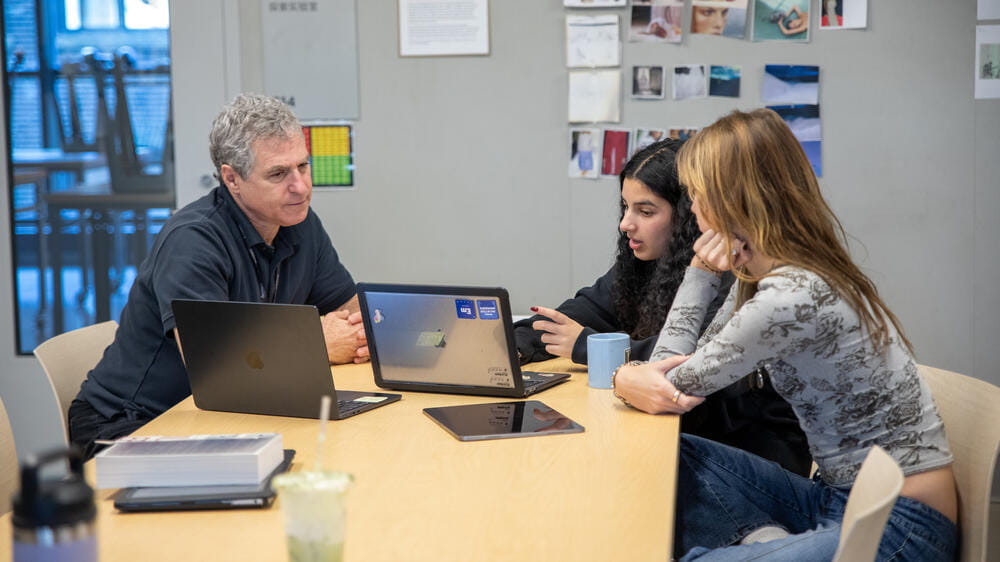
Advanced real-world learning
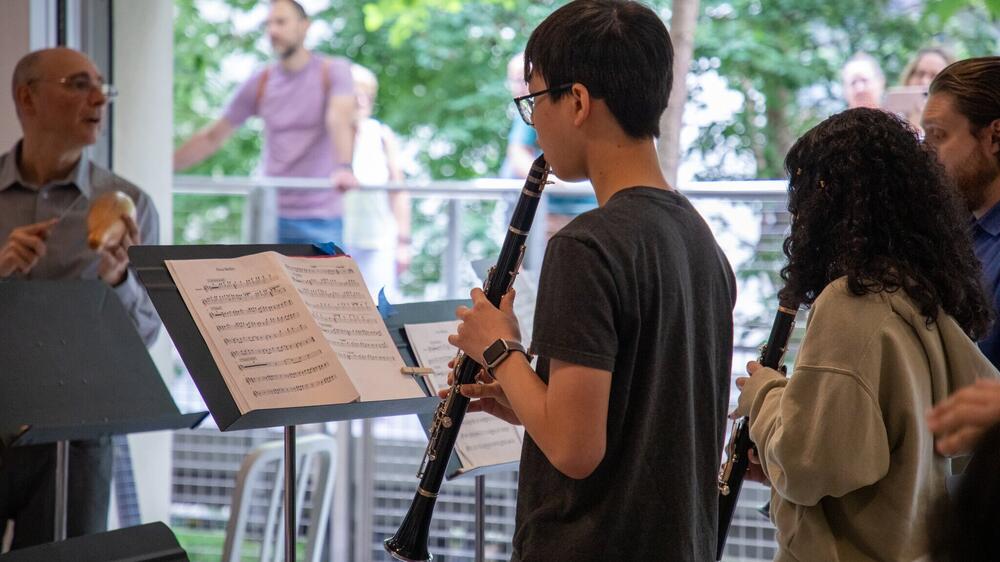
J-Term
.jpg?h=562&iar=0&w=1000&rev=f80d502c75f64570a6d9343791f3b98f&hash=BCB96984966BBD97B1F72519BE4B3E04)
Mastery Learning System
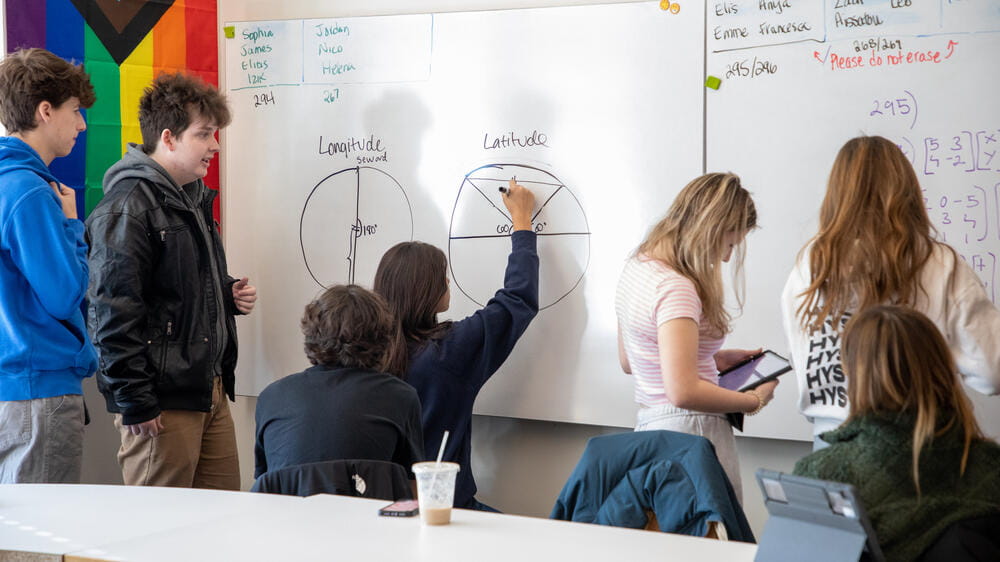
Avenues Institute for Advanced Mathematics (IAM)
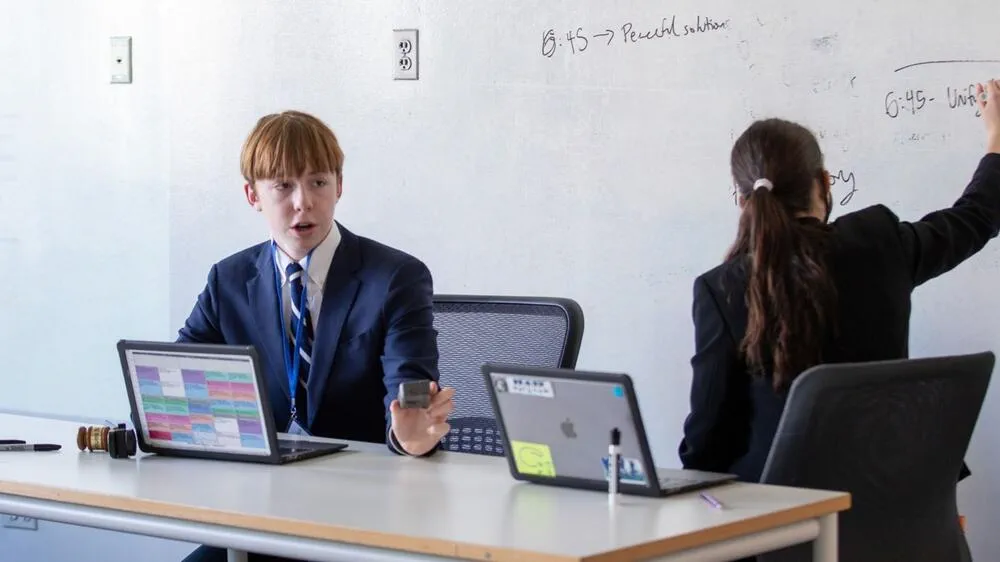
The Institute for The Advanced Study of Ethics and The Common Good
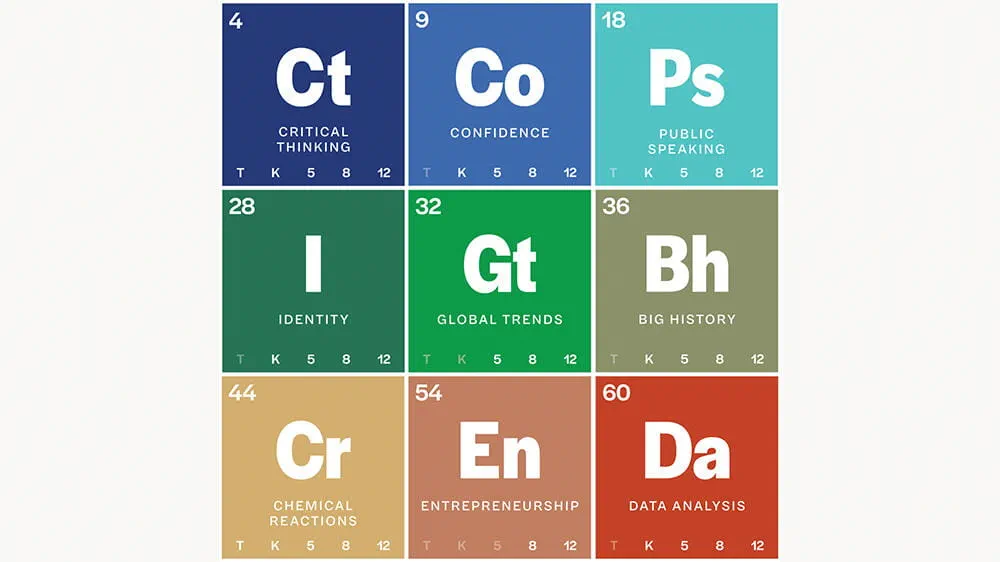
Avenues World Elements
The Upper Grades Curriculum
- English
- Humanities Electives
- World Course
- Math
- Natural Sciences
- Modern Languages
- Social Sciences
- Visual Arts and Design
- Performing Arts
- High-Intensity Practice
- Senior Seminars
- Wellness and Movement
- English
- Humanities Electives
- World Course
- Math
- Natural Sciences
- Modern Languages
- Social Sciences
- Visual Arts and Design
- Performing Arts
- High-Intensity Practice
- Senior Seminars
- Wellness and Movement

In this interdisciplinary course, students examine America through both history and literature, exploring the forces that have shaped American society—including slavery, Indian removal and imperialism—alongside the stories and myths that have helped define national identity. As readers and writers, students consider how personal experience, values and beliefs shape perspective, while developing their own voices through personal essays. Texts studied have included The Great Gatsby, selected poems by Walt Whitman and Emily Dickinson, and essays by James Baldwin, Margaret Fuller and Ralph Waldo Emerson.
World Literature continues to develop students as readers, writers, speakers and listeners, building on the skills introduced in previous humanities courses. Through the study of global texts across genres, students examine how style, structure and meaning shape—and are shaped by—cultural perspective. Readings engage questions of race, class, gender and sexuality while introducing students to a wide range of voices, traditions and literary forms. Although the course is not tied to a specific history class, interdisciplinary inquiry remains central. Writing assignments invite students to strengthen both creative and analytical skills through poetry, short fiction, personal essays and literary analysis.
In upper grades Humanities Electives, students deepen their skills as readers, writers, thinkers and cultural critics through courses that explore literature, philosophy, journalism, film, poetry, creative writing and adaptation. Across these electives, students engage with global texts and media, develop analytical and creative voices, and examine questions of identity, ethics, power, memory, meaning and artistic expression. Advanced courses are available for students ready for deeper inquiry, independent thinking and more rigorous writing.

Movies Matter: Intro to Film History and Analysis (10)
Advanced Humanities (10, instructor approval required)
Genre Study: Contemporary American Poetry from Modernism and Beyond (10–12)
Advanced Adaptation: Text to Music, Film, and More (11–12, teacher recommendation required)
Consciousness, Ethics and the Search for Meaning (11–12)
Creative Writing (11–12)
The Chronicle: A Global Study of Witness, Space, and Voice (11–12)
Film Studies (11–12)
Advanced Gothic Literature (11–12, teacher recommendation required)
The Impossible Dream: Quixotic Characters in Literature and Film (11–12)
Advanced Journalism (11–12, teacher recommendation required)
Advanced Shakespeare: The Political Shakespeare (11–12, teacher recommendation required)
The World Course program in grades 9 and 10 is part of an intensive, interdisciplinary program linked to the Global Studies humanities program. In grades 11 and 12, students select from topic-specific World Course electives, while in 12th grade, the Senior Seminars round out the World Course pathway.
World Course electives for the 9th-grade focus on case studies in the contemporary world that reflect larger thematic issues about the choices different societies make about how they are structured and organized and what factors inform those decisions.
World Course electives in the 10th-grade focus on the key drivers and impacts of modernization as it continues to evolve in a variety of ways across the globe. Major focal points will be how inequality developed and is perpetuated, as well as whether some of the unforeseen side effects of the modern world can be successfully managed in the near future.

World Course 9 provides students with an opportunity to understand and hone social science skills that will be crucial for them in high school, higher education, and life. Students will learn research skills that will not only help them create high-quality work in all of their classes but will also help them navigate issues of credibility and reliability in the rapidly expanding universe of our information age. Students will also learn how to closely analyze material through a critical lens and express their analysis in a variety of written structures.
Though the above skills will always be taught in World Course 9, the content they will be taught may change from year to year. This class aims to provide students with a deep understanding of the context surrounding issues and challenges that currently exist in our world. These challenges could range from military conflicts to clashes in world views, to the ramifications of different policies on a wide variety of topics. In each unit, students will study a relevant historical period or civilization with the intent to apply the lessons we have learned to create solutions for our world today. By seeing history not only as a tool for understanding the past but also as a tool for guiding the future, this class intends to help students become tomorrow’s change agents.
The American Dream is a concept that can be traced back to the earliest English settlers seeking economic opportunity and fleeing religious persecution. However, there is another side to that dream that needs to be addressed. The Native Americans were displaced from their land, the first enslaved Africans were brought to the colonies, and other groups were denied access to that dream. Often, one group's achievement of the American Dream was linked to another's servitude.
In attempting to present a more balanced and inclusive version of American History, this course will focus on the concept of the American Dream from a variety of angles. We will examine what the American Dream means and how it has meant different things to different groups at different times based on social, political, cultural, and economic conditions. Additionally, we will examine the ways in which historically oppressed groups have organized to increase their access to that dream. Finally, we will look at its modern conception and identify parallels to the current political landscape.
While covering this material, we will work on several important historical skills: causation, periodization, comparison, contextualization, argumentation, use of evidence, interpretation, and synthesis. We will work in concert with other disciplines, i.e., English, Art, and Science, to hone common skills and enhance our understanding of historical events. Additionally, we will analyze large numbers of primary documents to help us see America's past from the eyes and perspective of those who lived through it.
Advanced History (10)
Eastern Philosophy (11–12)
International Relations and Globalization (11–12)
Philosophy: What is Wisdom? (11–12)
Advanced Philosophy: What is Wisdom? (11–12)
Integrated Math 1–4, typically taken in Grades 8–11, includes two parallel pathways: Integrated and Advanced Integrated. Both pathways cover the same core content and prepare students for a range of senior-year math options, including calculus, discrete mathematics, data science and statistics.
The Integrated Math pathway builds strong problem solvers through direct instruction, guided inquiry, collaborative problem-solving and discussion, with targeted support from teachers. Students develop computational and algebraic fluency while strengthening study skills such as note-taking, organization and independent coursework management.
The Advanced Integrated Math pathway is designed for students ready for greater mathematical complexity and independence. Students engage in more rigorous problem-solving, deeper reasoning, multiple representations and non-routine applications. Placement requires approval from math faculty and deans, based on student performance, readiness, interest and assessment data.
Because year-end learning outcomes are aligned across both pathways, students may request to move between pathways at the beginning of Grades 9–11 if another pathway better supports their goals and needs. Students in either pathway can study calculus in Grade 12, though some advanced senior-year courses may require teacher recommendation, readiness assessments and placement.

In this integrated math course, students strengthen mathematical reasoning, communication and problem-solving through discussion, proof and real-world applications. Topics include quadratics, the Pythagorean theorem, slope, vectors, parametric equations, rates of change, Euclidean geometry, circle and right triangle trigonometry, congruence, similarity and properties of geometric figures.
In this integrated math course, students deepen mathematical reasoning, communication and problem-solving through discussion and applied exploration. Topics include similarity, circle properties, triangle trigonometry, volume of solids, trigonometric functions, circular motion, matrices, exponential and logarithmic functions, permutations, combinations and probability.
In this integrated math course, students synthesize concepts from Integrated Math 2 and 3 while strengthening mathematical reasoning, communication and problem-solving. Topics include inverse functions, periodicity, probability, permutations and combinations, finite and infinite series, convergence, polynomial graphs, asymptotes, limits, continuity and discontinuity, preparing students for the study of Calculus.
In Grade 12 mathematics, students may pursue advanced courses including Calculus, Discrete Mathematics, Data Science and Statistics. Across these courses, students extend and synthesize concepts from earlier integrated math study while deepening their reasoning, communication and problem-solving skills. Topics may include inverse functions, periodicity, probability, permutations and combinations, finite and infinite series, convergence, polynomial graphs, asymptotes, limits, continuity and discontinuity, preparing students for advanced mathematical study beyond Avenues.
In 11th and 12th grade, the following electives are available:
Advanced Computer Science
Fact or Fiction? Interpreting Data in Everyday Life
Misleading Maps: Geographic Data Science
Statistics and Data Science in Action: Modeling Real-World Problems
Advanced Robotics Engineering: Mechanical 1& 2
Advanced Robotics Engineering: Software and Control Systems 1 & 2

This course focuses on developing the ability to think and behave like scientists and engineers. By engaging in authentic scientific investigations and engineering design projects, students develop a deep understanding of big ideas like energy transfer and system dynamics that are applied in all fields of science and engineering work.
Ninth-grade science is broken down into three major units. In the first two terms, students investigate the nature of matter and materials by zooming in to explore the forces and energy transfers that govern everyday materials at molecular, atomic and subatomic scales. They also explore how those same forces and energy transfers govern the formation of the universe, galaxies, stars and planets. In the second half of the year, the course explores how engineers have applied scientific concepts to design our modern world. In Term 3, students use the cell phone as a case study to investigate how devices take advantage of various energy transformations to store, process and transfer information in the form of waves. Students then apply their understanding of forces and energy transfer to design and build a solution to a physical problem—such as a case to protect the cell phone.

Grade 10 science focuses on developing the ability to think and act like a scientist. Students develop a deep understanding of big ideas like the properties, structure and behavior of matter, as well as its interaction with energy. The primary means of investigation is through laboratory exploration, group discussion and readings. Students conduct inquiry and directed lab experiments that require application of concepts learned in class.
The first half of the school year investigates the nature of matter and materials by exploring the energy transfers that govern everyday materials at molecular, atomic and subatomic scales. The second half of the year focuses on the activities and systems of living and nonliving things in our environment by applying the properties, behavior and interactions of matter and energy.
This course is a full-year, in-depth study of how chemistry drives biology. The core principles of science are used to promote deep understanding and appreciation of complexity, diversity and interconnectedness of life on earth.
The course focuses on the correlation between structure and function starting at molecular level and up to the level of organisms; the chemical principles that drive biology and enable cell metabolism, principles of classical and molecular genetics and evolutionary theory; energy transformations within living systems and interactions between organisms and their environment. The study of major discoveries in biology will facilitate the understanding of and provide insight into modern and future problems and solutions. The emphasis is placed on the modern biotechnological and technical advances as applicable to medicine, food production and human wellness. Students will be able to apply knowledge gained in this course to their everyday lives and use learned lessons to make informed choices as members of a global community.
Laboratory investigations and other experiential learning opportunities will help students acquire a deeper understanding of concepts while developing their analytical skills. Students will gain skills using laboratory apparatus and correct laboratory techniques and procedures. They will learn the uses of classical and contemporary equipment in a biological laboratory. Dissections of chosen organisms will be used to promote the understanding of organization and functions of living things. Students will design and carry out long and short-term investigations using principles of the scientific method and use proper formats for reporting their findings.
Advanced BioDesign & Bioengineering (10)
Comparative Vertebrate Anatomy & Physiology (11–12)
Advanced Chemistry (11–12)
Cosmology & Astronomy (11–12)
Advanced Physics with Calculus (12)
Advanced Organic Chemistry (12)
Advanced Biology (12)
Advanced Physics (10–12)
Advanced Physics with Calculus (12)
.jpg?h=506&iar=0&w=1800&rev=5a8e23023bfb4b85976018b4ed9f9435&hash=57E5825C6378CE202E1B24AAAD9C1999)
Students enrolled in Chinese continue to refine their communication skills in all four areas of the Avenues Language Scale: oration, discussion, writing and reading. Students demonstrate their Chinese proficiency across the three communicative modes—interpersonal, interpretive and presentational—and the five goal areas—communication, cultures, connections, comparisons and communities. The course emphasizes the expansion of students’ language use in authentic and relatable themes as they develop a greater appreciation for and understanding of Chinese language and culture.
Chinese 1: Discovery (9–10)
Chinese 2: Breakthrough (9–10)
Chinese 3: Exploration (9–12)
Chinese 4: Empowerment (9–12)
Advanced Chinese: Homelands and People (9–12)
Advanced Chinese: A Changing China: Media and Culture (9–12)
Advanced Chinese: History and Society (9–12)
Advanced Chinese: Literature and Arts (9–12)
Advanced Chinese: Specialized Topics in Chinese (9–12) Possible topics include: Business, Contemporary Literature and Cinema, Eastern Philosophy, Ancient China and more.
Advanced Specialized Individual Pathways in Chinese (11–12)
Students enrolled in Spanish will continue their development of the Avenues Language Scale communicative skills (oration, discussion, writing and reading) with an emphasis on performance tasks and oral production. Instruction is focused on outcomes designed for different proficiency levels as students demonstrate their mastery through performance-based and project-based activities. The course emphasizes the expansion of students’ language use in authentic and relatable themes as they develop a greater appreciation for and understanding of Spanish language and culture.
Spanish 1: Discovery (9–10)
Spanish 2: Breakthrough (9–10)
Spanish 3: Exploration (9–12)
Spanish 4: Empowerment (9–12)
Advanced Spanish: Old World: Spain (9–12)
Advanced Spanish: Media and Culture (9–12)
Advanced Spanish: New World: Latin America (9–12)
Advanced Spanish: Literature and Arts (9–12)
Advanced Specialized Topics in Spanish (11–12) Possible topics include: Writing & Philosophy, Cities in the Hispanic World, Journalism & Creative Writing and more
Advanced Specialized Individual Pathways in Spain (11–12)

Being Human in the Age of the Internet
City of the World: An Interdisciplinary Study of NYC Immigration
Cognition, Choice, and Behavior
Foundations of Economics
Advanced History
Advanced History: Post–Cold War Latin America
International Relations and Globalization
Leadership & Entrepreneurship: Making Things Happen
Linguistics: Language, Power, and Society
Advanced Communications Theory
Advanced Macroeconomics
Advanced Microeconomics
Philosophy of Economics
Advanced Political Science
Psychology
Social Science Lab: Examining Society
Sociology
Strategic Finance: From Your Wallet to the Boardroom

In grade 9, students take Introduction to the Creative Process, a full-year studio course that helps them bring original ideas to life through visual art practice. Students explore materials, tools and techniques across selected digital and fine arts media while researching art history and contemporary trends.
Through sketching, experimentation, critique and reflection, they learn how artistic choices shape meaning. Students also use Chelsea galleries as a resource, meet professional artists and present finished work publicly.
In grade 10, students choose from a range of Visual and Digital Arts Workshops designed to deepen their skills and explore a particular passion for art-making. Workshop options include Drawing and Painting, Photography and Sculpture, each emphasizing creative thinking, technical development, visual communication and engagement with historical and contemporary artists. These courses allow students to build confidence in a focused medium while preparing for higher-level visual arts courses in grades 11 and 12.
In grades 11–12, students may choose from a range of electives:
Advanced Art History: Revolutions in Modern Art
Crafting with Fire: A Disciplined Approach to Pottery
Commercial Art
Digital Art
Film Studio 1 & 2
Advanced Film Studio
Illustration: Drawing for the Real World
Advanced Studio Art 1 & 2
Students who have taken Design and Engineering Workshop in grade 10 may take Advanced Design and Engineering Studio in grade 11. Students who have taken Design and Engineering Studio or Advanced Studio in grade 11 may take Advanced Design and Engineering Capstone in grade 12.
Course Offerings:
Design and Engineering Workshop (9–10)
Design and Engineering Studio (11–12)
Advanced Design and Engineering Studio (11–12)
Advanced Design and Engineering Capstone (12)

Students develop creativity, technical skill, musical literacy and confidence as performers through vocal and instrumental study. Courses invite students to explore a wide range of genres, collaborate in ensembles, compose and arrange original work, and perform in both formal and informal settings throughout the year. Advanced ensembles are available by audition for students ready for a higher level of commitment and musicianship.
Music Courses:
Introduction to the Creative Process: Music (Grade 9)
Choral/Vocal Music Workshop (Grades 9–10)
Instrumental Music Workshop (Grade 10)
Choral/Vocal Music Workshop (Grades 11–12)
Instrumental Music Workshop (Grades 11–12)
Advanced Music (Grades 9–12, audition required)
Advanced Choir (Grades 9–12, audition required)

Senior Seminar is a comprehensive module within the 12th-grade curriculum that delves deeply into the study of social sciences and humanities, with a particular focus on critically analyzing the rich tapestry of Chinese civilization. Beyond its academic content, the course is designed to equip students with essential skills vital for success at the college level. Central to our pedagogical approach are three core principles: Global Mindset, Perspectives, and Transferability.
Throughout the course, students will engage with a diverse array of materials sourced from leading Sinologists within Western academia. These materials encompass classic literature, philosophical treatises, non-fiction works, historical primary sources, empirical research papers, journals, commentaries, and critiques.
Moreover, the course places a strong emphasis on honing research skills through participatory activities such as presentation conferences and independent research projects. These activities mirror the academic environment prevalent in universities, preparing students for the rigors of higher education while fostering a spirit of intellectual inquiry and autonomy.


Independent Movement: Students will pursue modes of movement they are personally passionate about and are coached to develop healthy exercise habits independently. To satisfy the criteria for Independent Movement, students must meet one of the following criteria:
Commitment to at least two JV or Varsity Avenues Athletics teams
Participation in organized physical activity outside of school, averaging at least 120 minutes per week (club team, competitive gymnastics or dance, martial arts, personal performance training, etc.)
Activity logs and/or reflections of Independent Movement activities will be part of Wellness assessments.
Upper Grades fast facts
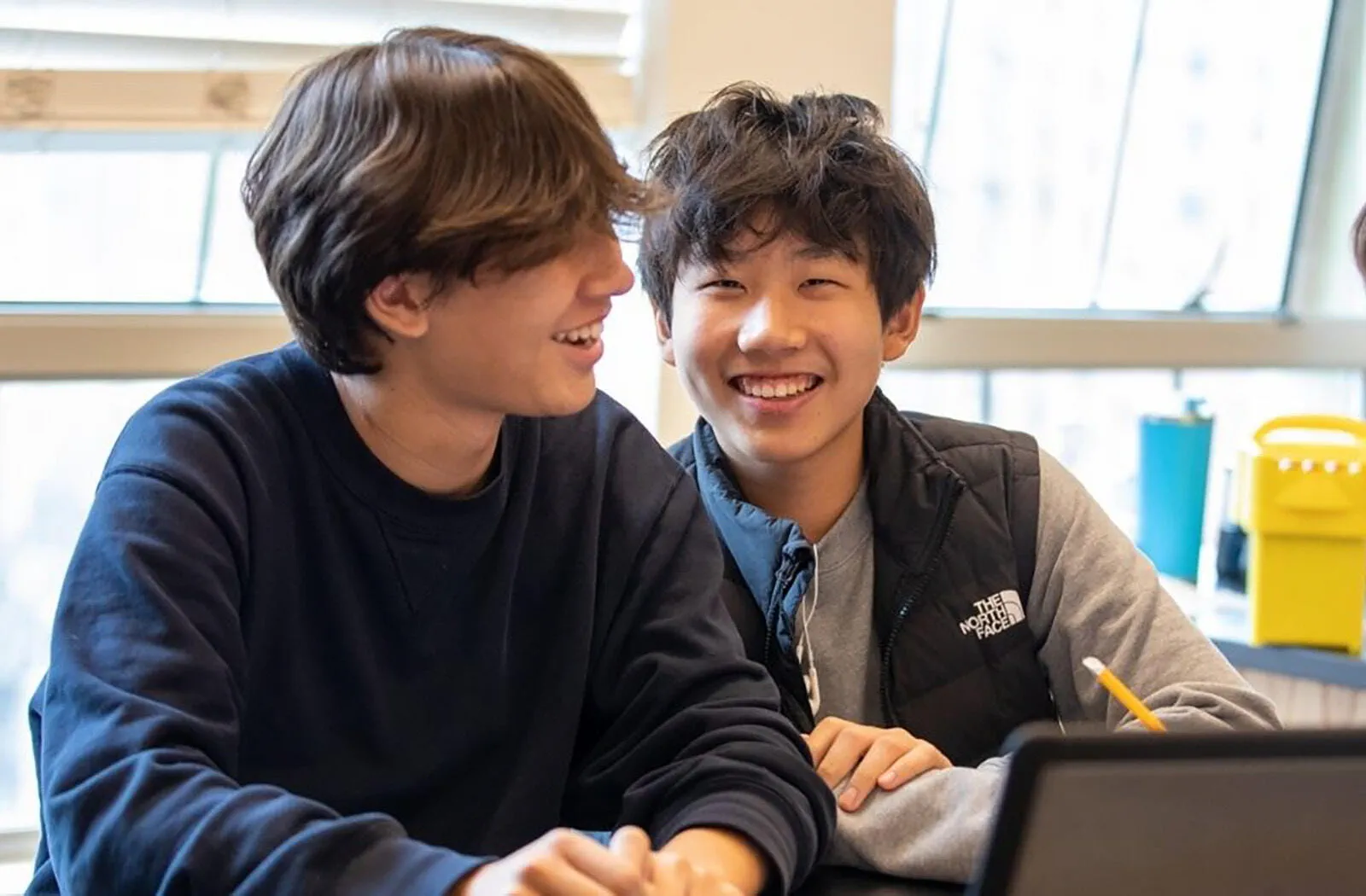
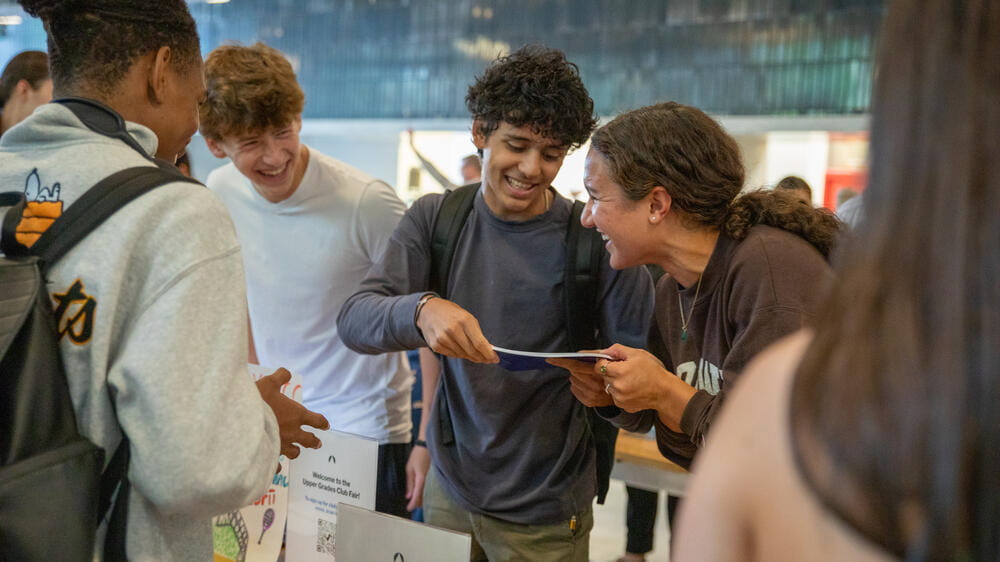
A vibrant community where every student belongs
Activities included: Acapella Club, AIT (AI in Tech), Asians @ Avenues, Astrophysics Club, Avenues Art Club, Avenues Robotics, Black Student Union (BSU), Business and Finance Club, Ceramics Club, Chess Club, Debate Club, Education For All, Gender & Sexuality Alliance (GSA), International Student Council (ISC), Italian Culture Club, Jewish Culture Club, Latin American Student Union (LASU), Model United Nations, Service Learning Club, and Spanish Immersion Club, and more.
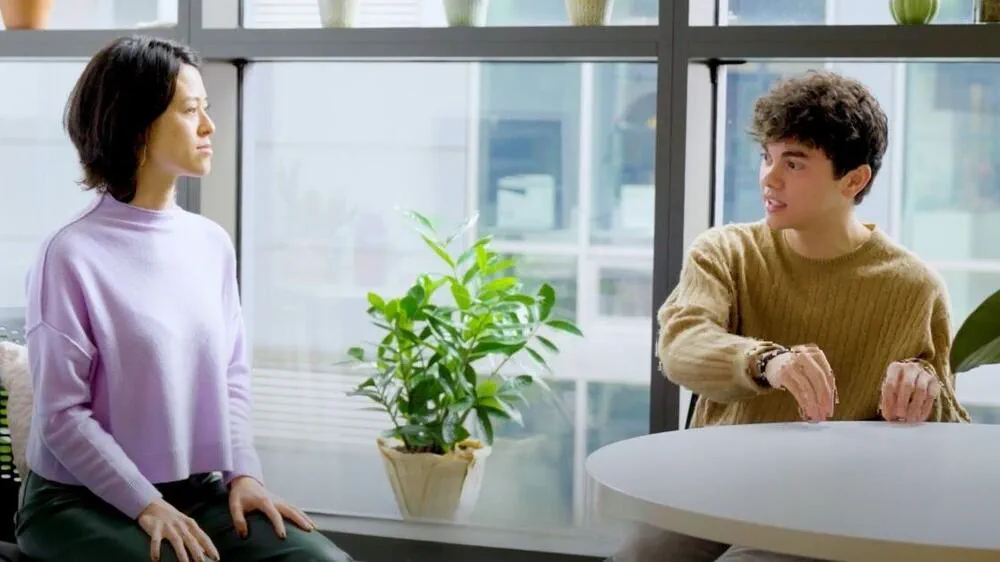
The Deans Program

Global Journeys
Your child’s Avenues journey starts here


 © 2026 Avenues: The World School All rights reserved.